This page is a list of only the cruising or sailing books I wholeheartedly recommend to other voyagers or anyone thinking about voyaging. I included my own short description with each. To learn more about any book, click the picture to go to the Amazon page.
--MR
Cruising Reference Books
Cruising Stories
Culture Books for Cruisers

Movies

--MR
Cruising Reference Books
 | Marine Diesel Engines, Nigel Calder I bought my copy of this book in the early 1990s from Calder himself, after a talk he gave about diesel engines for cruising sailors. It is the clearest guide on the care, operation, and diagnosis of a diesel engine I have ever seen. It is not a long book (195 pages) and about every page is filled with pictures and drawings. There is a section on transmission and an appendix on tools. For me, the key is that Calder doesn't just tell you how to do something, he explains why. My copy is an older second edition, but I imagine it has improved, though it is difficult to see how it could have. |
 | The Complete Rigger's Apprentice, Brion Toss This book was a gift and it's proven to have been a good one. Want to learn to splice line? Want to do some fancy macramé around your ship's wheel? Want to do anything rigging related? This is an excellent resource. It's also a fun read, not at all technical, with great stories interspersed and interesting illustrations. This is the updated edition for 2016. |
 | Boatowners Mechanical and Electrical Manual, Nigel Calder This guide to the mechanical and electrical stuff on boats is both clear and comprehensive, as you would expect from Calder. It is a big book and a long book (500 pages), but it has earned a place aboard our boat as the go-to resource for any systems problem or question that arises. There is a section on engines in this book too, but that information is not as comprehensive as what is in the stand alone diesel engine book (above). It is a bible, of sorts. |
 | This Old Boat, Don Casey Don Casey is a venerable writer of all things having to do with boat systems and equipment. He is a jack-of-all-trades when it comes to boats and his informative writing is not limited to purely electrical systems or engines, like Nigel Calder. Don Casey covers it all, from freeing a frozen zipper to repairing the hull. He has more than a half-dozen books in print, but this is the only one I’ve read. (And I've not yet read the entire thing. We've had it only a few months and I can't pry it out of Windy's hands to get my turn. 12/15/2010) |
 | This book is another large, heavy, comprehensive tome, but also an asset aboard. Ms. Leonard has cruised for years and covers a wide range of topics, from best anchoring practices to managing your financial and business affairs from a cruising boat. Ms. Leonard writes this reference book from a very neutral point of view, adding immesely to its value. She is generous with her own real-world observations and experiences, but covers topics with the perspectives of a range of cruisers, of varied budgets. |
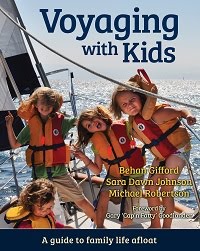
 | Voyaging with Kids: A guide to family life afloat, Behan Gifford, Sara Dawn Johnson, Michael Robertson It's hard to write about a book you co-authored, and the title is pretty self-explanatory. But check out the editorial and reader reviews on Amazon. I'm pretty proud of this one. |
 | World Cruising Routes, Jimmy Cornell There is nothing else like this book. For the cruising sailor sketching out a rough itinerary for the following year, this book contains valuable information about when it’s best to make any passage in the world. Much of this information is available anecdotally among the fleet, but Mr. Cornell’s book is both a good starting point and a confirming source. After a talk he gave a couple years ago, I approached him afterward and told him we were going cruising and asked if the earlier version of his book would suffice, or if I really needed to buy the new edition. In his thick, heavy accent he said simply, "You must buy the new book, lots of changes." Oh well. |
 | The Cost Conscious Cruiser, Lin and Larry Pardey Nobody has covered this topic as well as the Pardeys. For anyone cruising, or planning to cruise, on a budget, this sage book is filled with quotable passages and practical advice. From provisioning to equipping the cruising sailboat, the Pardeys cover it—and with an understanding that you likely have an auxiliary aboard. As the title implies, this book is especially intended for anyone cruising, or preparing to cruise, on a modest budget. It is inspiring and easy to read. |
 | Sailpower, Peter Nielsen There are a million books that cover sail trim in great depth. Unfortunately, they all seem to be geared towards the racing sailor. This book is unique in that it focuses on sail trim and sailing techniques for cruising sailors. Nielsen opens with a review of the physics of sailing and then gets to the art and science of trim. He roughly breaks the book down by sail type: main, headsail, spinnaker. There are pictures and diagrams to compliment the text. Nielsen is the editor of SAIL magazine. He published this book in late 2004, several months before I sold a feature to SAIL. I asked the editor I was working with if they would throw in a copy of this book as part of my compensation. The answer was no. I bought a copy; I'm glad I did. |
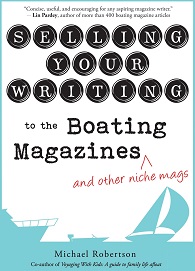
 | Selling Your Writing to the Boating Magazines (and other niche mags), Michael Robertson Again, hard to sing the praises of a book I wrote, but I love this little volume and I think it will be of great use to anyone wanting to sell their writing to the boating magazines--or any special interest magazine. Again, check out the editorial and reader reviews on Amazon and decide whether it's for you. |
 | Reef Fish Identification: Tropical Pacific, Gerald Allen, Roger Steene, Paul Humann, Ned DeLoach My friend Behan Gifford on Totem turned us on to this book. It is the ONE. Forget all other fish ID books. The photos are great, the organization is intuitive, and the information is comprehensive and well-organized. If you cruise the Tropics, you'll be in the water a lot and once you start identifying what you're seeing, you'll be hooked. Following Totem's lead, the Del Viento copy is marked up with highlighting and notes indicating what we've seen and where. |
 | Reef Creature Identification: Tropical Pacific, Paul Humann, Ned DeLoach See the description above. If you plan to snorkel or dive while you cruise the Tropical Pacific, you will want this book too. They look the same, but this one covers the non-fish critters you'll see. |
 | Guide to Marine Mammals of the World, Do you have any idea how many different types of dolphin there are? Do you realize you will see many different types? Rather then just retreat to the cockpit thinking, "They looked different than Flipper," have this book aboard so you can identify what you see. There are lots of similar books; we like this one a lot. |
 | The Water in Between: A Journey at Sea, Kevin Patterson Want to read a really good memoir? Interested in the South Pacific? This book contains so many passages with keen insights that most of my well-worn copy is highlighted and the pages are dog-eared. Patterson is a writer of the highest caliber and this is his best. |
 | Into the Light: A family's epic journey, Dave and Jaja Martin This book opens with a riveting first-hand account of sailing at night in the middle of the frigid North Atlantic, with three kids aboard, and a hole in the hull. From there, this book does not let go, with frequent back story diversions that let you know who the Martins are and funny, poignant present-day tales of the family’s winter aboard in Iceland and their nationwide publicity campaign to retain their Norwegian visa. The Martin’s story is very well written and though it may reflect an adventurous side of cruising you don’t want for your own family, you won’t help but feel that if they can accomplish what they did, your own ambitions are within reach. |
 | Passage to Juneau: A sea and its meanings, Jonathan Raban Even if you never get up to the Pacific Northwest or take any interest in the Salish Sea and the Inside Passage and all the wonder and splendor to be found up there, read this book. Raban needs no introduction. He is a travel writer who has on his mantle just about every writing award worth winning. His prose is not just beautiful, but paints images and characterizations you cannot turn away from. This is a modern classic. |
 | South from Alaska: Sailing to Australia with a Baby for Crew, Mike Litzow The opening quote from Joseph Conrad’s Lord Jim, “There is no life like the sea, where reality falls so short of romantic expectation,” is a fitting start for South from Alaska, a book that speaks to both sides of the brain simultaneously and without contradiction. Litzow writes of the physical and emotional hardships of leaving it all behind and sailing from Alaska to Australia with his wife and 10-month-old child aboard Pelagic, a 25-year-old Crealock 37. He describes it in prose so beautiful, and with such a dose of self-deprecating comic relief, that you yearn to be there with them, forging ahead to realize a shared dream. And if I weren’t already cruising, his honest account would boost my own romantic notions of life at sea. |
 | All In the Same Boat, Tom Neale The Neale family’s cruising story is pedestrian in contrast to the Martins (above), but inspirational and spanning a much longer period of time (read this post about how this book inspired me). Tom was a New England lawyer who decided with his wife to go cruising soon after their first daughter was born. For their entire lives, their two girls lived aboard while the family migrated annually, with the seasons, up and down the ICW and across the Gulf Stream, from Boston to the Bahamas. Perhaps more than other cruisers, their repetition allowed them to become very comfortable with their route, to almost dispense with passage-planning anxiety, and to give their kids a sense of continuity. |
 | The Cruising Life: A Commonsense Guide for the Would-Be Voyager, Jim Trefethen Do you want inspiration, at the nuts and bolts level? Then this book is for you. The subtitle of the previous version was, “How to set sail within 5 years and live well and adventurously, even if you don't have a boat yet” and Trefethen offers insight, advice, and inspiration found no place else. One piece of wisdom we took to heart is his recommendation to wait as long as possible before buying the boat you intend to voyage on. His sensible reasoning is that it costs a lot of money to own and keep a boat, why spend that money before you need to? Rather, wait so that you have more money in your pocket when you do go. Until we bought our boat, whenever people would learn we are into sailing, they would ask why we didn't have a boat. Our response was always that boats are too expensive, that we're saving to go cruising instead. Thank you Jim. |
 | The Strange Last Voyage of Donald Crowhurst, Nicholas Tomalin/Ron Hall This is one hell of a book describing one hell of a riveting story. If you do not already know it, I envy you, because you still get to experience it for the first time. Take a look too at the movie I profile below, Deep Water, same story. |
 | Dove, Robin Lee Graham This is the classic. Back in the late 60s and early 70s, before cruising was mainstream, a 16-year-old Graham set sail on a 24-foot boat around the world. The world has since changed, but the spirit of adventure that he stoked in many cruisers since, is alive and well. Especially interesting to me is the beginning of the book in which he describes his motivation and the boyhood exploits that defined who he is. The movie version of the Dove is okay, worth renting. (If you're interested, the follow up book is Home Is the Sailor |
 | Blown Away, Herb Payson In the annals of cruising literature, there are many who are serious and sacrosanct about life under sail, there are few who get the lighter side and relate it so well. The late Herb Payson is a master storyteller. This book, written about a voyage from decades ago, is timeless, reading like a trip completed last year. He was a nightclub piano player, she was a cocktail waitress, they both drank too much, they had 4 kids, they had no money, they went cruising on a tiny boat. It's so good. |
 | Chasing the Horizon, Fatty Goodlander Capn’ Fatty is like no other. He is a self-described sea gypsy who cruises the world on a sunken boat he salvaged, and got himself a gig on NPR. His monthly Cruising World column is always humorous, insightful, and a delight to read. This book chronicles (embellishes?) experiences he and his family had while cruising the Caribbean back when it was a comparative wild west. This is a collection of well-told stories with characters that could not be made-up. Goodlander also has a second book out and recently released a compilation called Collected Fat |
 | North to the Night: A Spiritual Odyssey in the Arctic, Alvah Simon Alvah Simon wrote this book with a power and eloquence that is impressive. When I first read it in 1997, I bought a copy for everyone on my Christmas list. The book chronicles his year up north, way up north, with his boat, Roger Henry. When his wife, Diana, was called away early in the adventure for a family emergency, he stayed alone with his cat, Halifax of the North. A dark and persistent night descended, temperatures dropped, and all fuel needed to heat the boat was lost. This book also features remarkable pictures and accounts of his interactions with the inuit who call the north their home. His writing and descriptions in this book are so masterful, just reading it makes me want follow in his footsteps, but also give up writing forever. Simon is a regular Cruising World contributor. |
 | Adrift, Steven Callahan Hit a whale, watch your boat sink out from under you, take to a life raft, and wait…for more than two months. Callahan relates his ordeal in this compelling book that will give you cause to think very carefully about the integrity of your life raft (or life boat), the contents of your ditch bag, and the fortitude of your mind. In this post, I wrote about my encounter with the author at the 2009 Annapolis Sailboat Show. |
 | Fastnet, Force 10, John Rousmannerie This book is part story, part news report, part study, part interview, and a riveting classic. You know the story before you open the cover, but Rousmannerie keeps you turning the pages, introducing you to one crew after another and placing you in the cockpit of their boats during the worst of this sail boat racing tragedy. There are many lessons you can take away from the 1979 Fastnet race, but the one cited most often comes right from the pages of this book: never abandon your ship until you have to step up to your life raft (or life boat). Also included among the pages are graphic pictures, many taken from search and recovery craft after the storm had passed. |
 | Fatal Storm: The 54th Sydney to Hobart Yacht Race, Rob Mundle The 1998 Sydney-Hobart race was one of the great sailing tragedies, probably second to the 1979 Fastnet race. Besides how well-told this account is (and it's riveting because you feel like you are aboard some of the boats that struggle the most), it's fascinating because all the participants of this race are well-schooled in the details and lessons of the infamous Fastnet race. So the decisions that were made were influenced by that knowledge. Unfortunately, many still perished. Even if you're not into racing (I'm not), this is a great read. |
 | Sailing Grace, John Otterbacher I saw Otterbacher speak at the Annapolis boat show the year this memoir was published. He's a great speaker, but an even more impressive writer. Surprisingly, there is little sailing in this book, yet it is all about cruising, about the will to go cruising, about a will that probably saved the author's life. He was a year or so away from selling up and casting off with his family when heart disease overcame him. He was a non-smoking jogger with really bad genes. His tale of what he endured is harrowing and the resilience he displayed is inspiring. This is one of those page turners that keeps you up all night long. |
Culture Books for Cruisers
 | The People’s Guide to Mexico, Carl Franz Think about your knowledge of the culture of our diverse neighbor. Where did it come from? The Cinco de Mayo celebrations in college? News stories about illegal immigration? Cezar Chavez boycotts you read about in civics classes? The staff at your local Mexican restaurant? The week you spent in Cozumel or Cabo San Lucas? That night in Tijuana? Respectively, if you haven’t lived for years in Mexico, among Mexicans, your understanding is shallow at best, misinformed at worst. The next best thing to living in Mexico, to really get it, is to read this hilarious and insightful book. It is long, but the format is segmented and the writing delightful. If you are cruising Mexico or intend to cruise Mexico, I can’t recommend this book enough, for really getting the most out of your experience. |
 | Ma I've spent quite a bit of time in Mexico since the early 1980s--weeks, months, and years at a time. I love the country and the more I get to know it, the more Spanish I learn, the more I'm confounded. If you want to get a deeper, academic insight into Mexican culture, this book is a good place to start. Casteñeda was a foreign minister under the Fox administration and he studied at an Ivy League school in the U.S. |

Movies
 | Deep Water, 2006 In 1968, as a publicity stunt, a British newpaper (Sunday Times) sponsored a yacht race, a race like none before it. For a 5,000 pound purse, sailors had to singlehand their vessels around the world, non-stop, and unassisted. Nine men set out, only one man completed the race: Robin Knox-Johnston aboard Suhaili. But while this film covers the race and the entrants, it is really about the story of Donald Crowhurst aboard Teignmouth Electron. Crowhurst not only failed to finish the race, he never left the Atlantic and radioed fake position reports to make it appear he was on a blistering pace. In fact, log books recovered later indicate an early realization that his boat was not up to snuff and a desperation about what that meant for his homecoming. He had a wife and children and had mortgaged everything to the hilt to fund his entry. The stress drove him to madness, an ill-conceived plan to fake a win, and an apparent suicide. Crowhurst's story is wrenching and fascinating at the same time. (Bernard Moitessier was also an entrant and poised to win before he changed his mind and decided to keep sailing, halfway around again. He understood that he did not desire--and nor was he suited to--the fame that would have been bestowed upon his return. His sidestory makes me eager to read his autobiographical books.) |